CRICKET NEWS
Nepal vs Namibia: How to Watch the ICC CWC League 2 ODI Live From India — Match Time, Squads, TV Channels and Streaming Platforms
By the Empire Newsroom Desk · 21 July 2026 · Sportpark Maarschalkerweerd, Utrecht
ICC CWC League 2 2023–27 cycle · Netherlands tri-series
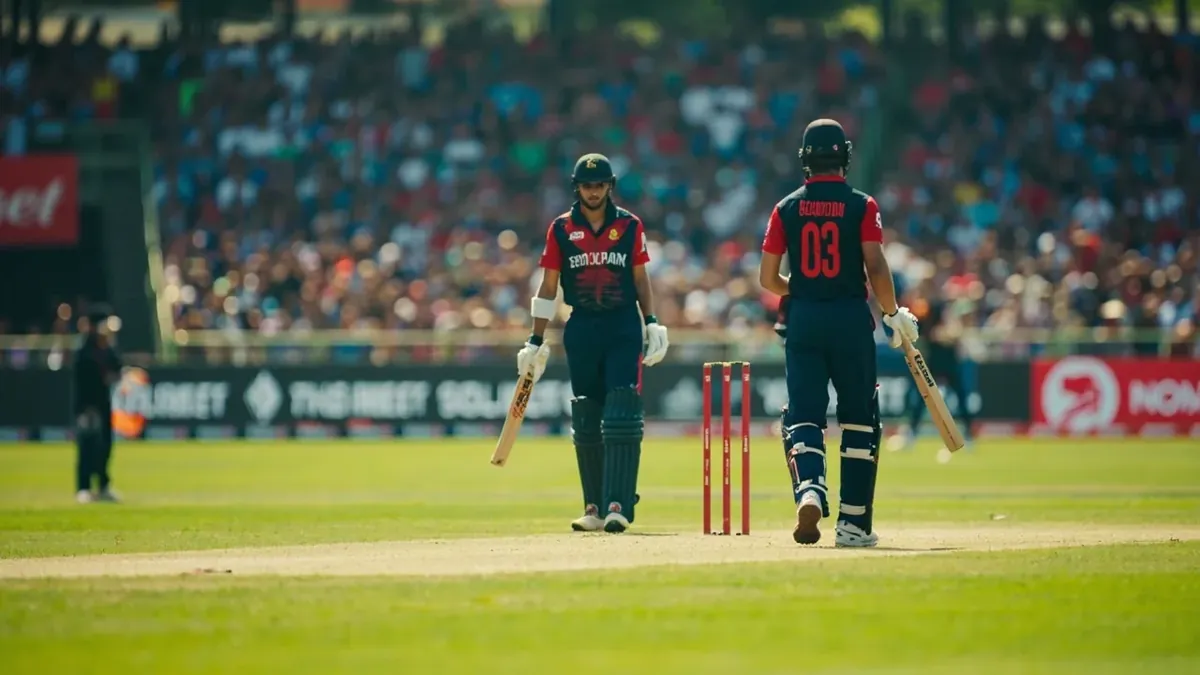
Nepal and Namibia step onto the same Utrecht surface on 21 July 2026 for the first of two ODIs between them inside the Netherlands tri-series, a stage of the ICC Cricket World Cup League 2 2023–27 cycle that is quietly reshaping the route to the next 50-over World Cup. India-based viewers cannot switch on a linear TV channel for the match, and that single fact is the reason so many fans search for a streaming answer the morning of the game.
This guide gathers everything a viewer needs in one place: the precise start time in Indian Standard Time, the Netherlands local time and GMT, the broadcast status for India, the streaming app that holds the rights, the match context inside League 2, and the latest squad lists both teams have travelled with. It is written so you can set an alarm, open the right app, and know who is playing before the toss.
Match at a glance
The fixture is the sixth league meeting between Nepal and Namibia inside the current cycle. It is the first of two ODIs the teams will play against each other in Utrecht — a second fixture on 27 July gives both sides a quick chance to correct course. League 2 doubles as the primary qualification pathway for the next ICC Cricket World Cup, alongside the global qualifier events, which is why every two-pointer matters far beyond bilateral bragging rights.
Both units arrive under pressure. Nepal sit fifth on the eight-team table with 24 points from 28 games. Namibia are a rung below in seventh with 22 points from the same number of matches, a gap slim enough that a win on Tuesday vaults them past the side above and a loss widens the floor underneath. The points table is dense; one swing of momentum has visible knock-on effects on every team's qualification arithmetic.
Match day details
The fixture carries the conventional bilateral naming on most score apps — Nepal vs Namibia — and the ICC's tournament code, NEP vs NAM, on official sheets and accreditations. The throwdown happens inside the 2023–27 CWC League 2 calendar, which spreads 36 league games across each participating side. Tuesday's match sits inside the Netherlands-hosted tri-series block, alongside Netherlands itself, run on a tight turnaround between ODIs.
Utrecht's Sportpark Maarschalkerweerd is a familiar venue for the Associate circuit. Its square has hosted several league engagements already this cycle, and the morning July weather in the Netherlands has typically started overcast and dew-heavy — a factor both captains have referenced in pre-match notes when asked about the toss decision. Conditions usually favour the side that bowls first, though seamers who can move the ball off the seam tend to hold value regardless of which innings they take.
Match time in India, Netherlands and GMT
The first ball is scheduled for 11:00 AM local time at the venue. For Indian viewers that translates to 2:30 PM IST on 21 July 2026. In the United Kingdom and across West European broadcasters the start sits at 9:00 AM GMT. South African viewers can pick it up at 11:00 AM SAST. The window between 11:00 and 14:00 local in Utrecht typically covers both innings and a short break, finishing well before evening travel restrictions in the region.
Given the 2:30 PM India start falls inside the working afternoon, several fantasy cricket platforms use the match as a lock for contests that close one hour before first ball. Live fans should plan for staggered browser refreshes rather than a continuous broadcast window if the network is shared.
TV broadcast in India
The match will not be carried on any Indian television channel. No major broadcaster — Sony Sports, Star Sports, JioCinema or any regional sports network — has ICC Cricket World Cup League 2 rights in the Indian sub-continent for the 2023–27 cycle. That is consistent with how the tournament has been treated inside India for several bilateral seasons: Associate cricket remains a digital-only property in this market.
This absence on linear TV is the single biggest reason fans stumble when searching for a watch link in the morning. The list of "TV channels" that some aggregator sites surface for League 2 fixtures typically reflect rights held in Caribbean, Pacific or East African markets rather than the actual Indian window. Viewers in India should not expect a set-top box option for this fixture.
Streaming platforms for India-based viewers
The live streaming rights for ICC Cricket World Cup League 2 in India sit with FanCode. The match is streamed on the FanCode app and on the FanCode website — both Android and iOS applications, as well as the desktop browser version. FanCode requires a paid pass for ICC bilateral and League fixtures; the platform typically opens a dedicated match pass window 24 to 48 hours before first ball and closes it at the fall of the final wicket.
Practical notes for streaming on FanCode: a reliable login with an active subscription or match pass is mandatory, payment methods accepted include UPI, debit and credit cards, and net-banking. Sign-in from a single device works for most home setups; multi-device streaming on the same pass generally requires a premium tier. Wifi is strongly recommended at the office end — FanCode streams have been known to clip at the moment of a wicket on patchy mobile data, which is the worst possible time.
For viewers travelling outside India, ICC.tv holds the worldwide digital rights outside the sub-licensing windows granted to regional partners. ICC.tv streams the entire League 2 calendar free for the basic tier and paywalls the premium tier with ad-free playback, multi-angle options and a built-in DVR feature. The match commentary track on ICC.tv is typically English with regional audio options on selected broadcasts.
Why fans search so hard for the streaming link
ICC Cricket World Cup League 2 has become the unsung qualifier circuit of the 50-over game. Eight Associate and ICC Full Member teams play 36 ODIs each, distributed across home-and-away tri-series hosted by participating cricket boards. The top three sides at the end of the cycle qualify directly for the next World Cup; remaining slots are settled at a global qualifier. The points race is therefore not a vanity table — it is a literal route to a World Cup.
That slow-boil stakes profile is one reason fans invest in tracking these fixtures carefully. Each ODI generates World Cup Super League points that eventually decide which teams play the qualifying tournament and which play at the World Cup itself. Watching a League 2 match, in other words, is watching the shape of the next ODI World Cup draw.
How both teams arrived in Utrecht
Nepal entered the tri-series block on the back of a chastening high-scoring loss to the UAE. The team posted a mammoth 233 in that outing — captain Rohit Paudel led from the front with a fluent 109 — only for the bowlers to let the position slip in a five-wicket defeat. The batting depth is real, and Airee in particular has been the team's leading run-getter with 736 runs in the cycle so far. The bowling ledger, though, has been thinner than the top-order returns suggest.
Namibia arrived in a similar mood. Their previous League 2 game was decided by a super over against Canada, a defeat that ate into points the side could ill afford to drop. Skipper Gerhard Erasmus remains the batting anchor — 675 runs in the cycle — and left-arm spinner Bernard Scholtz leads the bowling charts with 45 wickets across the campaign. Erasmus's side have won 10 and lost 12 inside the league schedule so far, a narrow tilt in the wrong direction that Tuesday's contest can begin to correct.
A key stat to note: Sandeep Lamichhane has 42 wickets for Nepal in the cycle, just three behind Scholtz. The head-to-head between the two spinners is one of the most watchable mini-battles the fixture offers on a typically slow Utrecht surface — if it grips as expected, the second innings could turn on the odd ball from one of them.
Pitch and conditions reading
Utrecht in mid-July typically produces two-paced cricket. Morning conditions in the Netherlands have started overcast in recent weeks, with humidity rising through the afternoon and the pitch slowing in the second innings. Bowlers who bowl a tight stump-to-stump line have held parity through the cycle; bowlers who overpitch have been punished. The square has not produced totals much above 250 in this campaign, which makes the toss a meaningful variable.
Both captains have spoken publicly about the value of batting first when dew is heavy in the second innings. Coaches inside the camp have also flagged the importance of catching — slip fielding in particular — because the wicket has held its hardness through day four of past blocks and edges have carried.
What to watch across both innings
Three storylines will frame the game regardless of result. First, the Nepal middle order beyond Airee — the side has been top-heavy for the last cycle and a substantial score from either Kushal Bhurtel, Sompal Kami or Binod Bhandari turns the contest from contested to commanding. Second, Namibia's powerplay — Erasmus is conservative early, Jan Frylinck aggressive — and how Nepal's new-ball pair shapes the first ten overs.
Third, the death overs. Both teams have conceded more runs in overs 41 to 50 than at any other phase of their innings, and a calm head in the final Power Surge has often been the difference between two points and zero. Scholtz's variations and Lamichhane's googly remain the cards most likely to be held back for the final ten overs; how long each captain holds them will likely decide who is chasing at the close.
Nepal squad
Rohit Paudel (c), Dipendra Singh Airee (vc), Kushal Bhurtel, Aasif Sheikh (wk), Ishan Pandey, Aarif Sheikh, Gulsan Jha, Sompal Kami, Nandan Yadav, Sandeep Lamichhane, Lalit Rajbanshi, Binod Bhandari, Karan KC, Bhim Sharki, Arjun Kumal. Travelling reserves: Shahab Alam, Hemant Dhami, Aakash Chand, Yuvraj Khatri, Sundeep Jora.
Namibia squad
Gerhard Erasmus (c), Zane Green (wk), Jan Nicol Loftie-Eaton, Malan Kruger, Jan Frylinck, Louren Steenkamp, JJ Smit, Ruben Trumpelmann, Bernard Scholtz, Jack Brassell, Max Heingo, Michael van Lingen, Waldo Smith, Alexander Volschenk.
Head-to-head and historical context
Across the 2023–27 cycle, the two teams have traded results inside a narrow band. In the previous league encounter in this cycle the margin was under 20 runs, and in the fixture before that it was decided in the final over. Neither side has dominated the matchup; both have a clear sense of the other's matchups, which is part of why the bowling — Scholtz versus Lamichhane — carries outsized importance.
Utrecht itself has hosted three League 2 fixtures between Nepal and Namibia since the cycle began, with the home side (Netherlands) winning none of those games. That venue context is small but not zero — Associate teams have reported the Maarschalkerweerd outfield runs faster than it looks, which favours batters willing to hit down the ground early.
How this game folds into the bigger League 2 picture
The next 12 months of fixtures decide at least three direct World Cup qualification slots. The Netherlands tri-series adds six ODIs to the count for each team, but more importantly it shapes the head-to-heads between sides sitting in the same points cluster. A win for either Nepal or Namibia in Utrecht does not settle the math, but it does influence the sub-tables that coaches and selectors watch when planning the next year.
For Nepal, a win on Tuesday would lift them back toward the fourth-place cluster; for Namibia, the same result puts daylight between them and the relegation-style pressure of the lower-half of the table. Both teams have reasons to treat this game as a six-pointer in everything but name.
What this means for the second fixture on 27 July
Both teams play each other again in six days at the same venue. The squad-size constraint means the same 15-man group will likely travel through that fixture with minor rotation. Selection on Tuesday — particularly around who bowls first change and which keeper batters slot in at No. 6 — is essentially the selection brief for 27 July as well.
That linkage is worth keeping in mind if you are watching the toss and the first powerplay. The captain who settles his side's batting order quickly on Tuesday is the captain who can make bolder experiments on the weekend.
Watching from India — practical checklist
To watch the match live from India without a TV option, set up FanCode on your phone or browser before the game starts. A 2:30 PM IST first ball means the streaming pass window should be live by 1:30 PM for safety. Charge the device, prefer Wi-Fi over mobile data, and keep a low-stakes backup stream open in case the primary feed clips during a wicket.
If you are travelling outside India and your FanCode pass does not recognise your IP, the ICC.tv global feed is the simplest fallback. Most matches in the cycle offer a free ICC.tv tier with English commentary and a small ad load, which is enough for casual viewing and a workable option if you only want to track the wickets and milestones.
Points table snapshot
As of the start of the tri-series, the top of the League 2 standings had been held by Scotland and Oman in recent weeks, with the United States in the third slot. Nepal sit fifth with 24 points from 28 games, Namibia seventh with 22 from 28. The race between fourth and seventh remains tight enough that a single two-point win reorders the cluster by swap-points rather than ladder positions.
That compressed middle is also why the cycle's remaining fixtures — Netherlands tri-series, a Canada home block, and a long Namibia–Nepal–UAE exchange — will attract more watching interest than the trophy implications usually draw. Each game functions as a rung.
Predicted finish and the realistic outcome window
On paper, Namibia are the marginal favourites given their slightly deeper bowling and Erasmus's batting discipline. Nepal's counter is more explosive top-order hitting and a spin attack that can squeeze middle overs. The realistic outcome window sits between a tight 20-run game and a chase under 250 inside 48 overs.
That window can be tightened further with three readings: the toss, the first ten overs of powerplay, and the dew in the second innings. Watch each of those checkpoints and the result will feel readable in real time even if neither side runs away with it.
Why it matters beyond Tuesday
The knock-on effect of Tuesday's game stretches into World Cup qualification mathematics, selection messaging for the 27 July fixture, and the psychological ledger both teams carry into the rest of the tri-series. Win, lose or draw, the result will shape how Erasmus and Paudel speak to the media in the next 48 hours and how their boards read the cycle.
For Indian fans following along on FanCode, this is as close to a frontier fixture as the modern Associate calendar offers. Two evenly matched sides, a clear streaming option, and a table that makes every run mean something tangible — that is the kind of ODI the calendar rarely gives us and that is why this game is worth 50 overs of attention on 21 July 2026.
For more recent matches, score updates and squad announcements from across the Associate and ICC calendars, the Empire Newsroom publishes fresh editorial coverage every day at fantasycrickett20.com/news.
Empire Newsroom — match coverage daily
Verified reports, squad lists and streaming details for every League 2 fixture on the calendar.