CRICKET NEWS
India Beat England by 270 Runs in the First Women's Test at Lord's — A Retrospective on 13 July 2026
By the Empire Newsroom Desk · 13 July 2026 · Lord's Cricket Ground, London · retrospective
India won by 270 runs · first women's Test at Lord's · 37,846 four-day attendance record
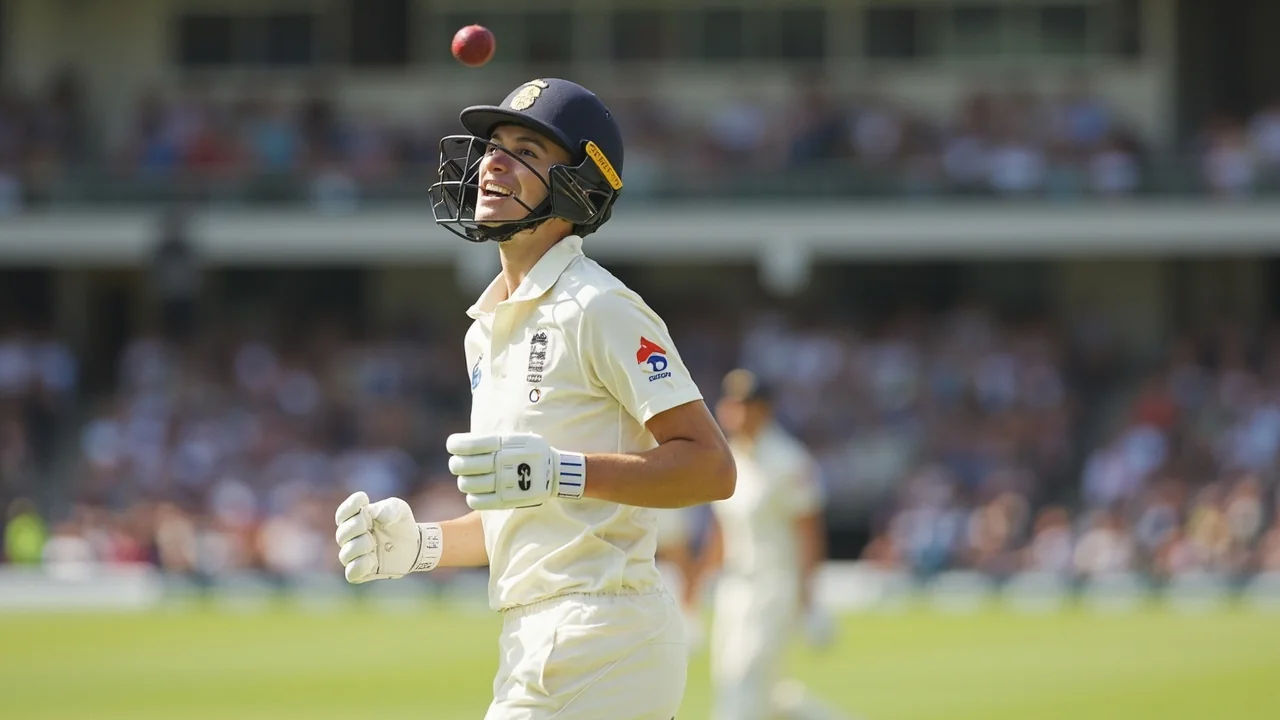
Sixteen days on from the close of play at Lord's on Monday 13 July 2026, India's 270-run victory over England in the first women's Test match ever staged at the ground still reads as the most consequential four days women's Test cricket has produced in England since the format was reintroduced. India sealed the result shortly before lunch on the fourth day, England bowled out for 186 in reply to a record target of 457, with Sneh Rana (4 for 42) and Deepti Sharma sharing the last four wickets.
The match was decided, in the end, by a third-innings collapse. England resumed day four at 130 for 6, needing 327 more runs to pull off what would have been the highest successful fourth-innings chase in any women's Test — a record Australia still hold with 198 against England in Sydney in 2011. The morning session of the fourth day removed that possibility in 31.3 overs. The day-three platform that should have given England a chance instead produced the innings that confirmed India's command.
How the four days actually ran
India won the toss and chose to bat, a decision captain Harmanpreet Kaur later described as the easier call on a dry, two-paced surface that grew slower through each session. England replied with seam discipline and tight catching — the home side bowled India out for 224 inside the first two sessions of day two after Yastika Bhatia's 65 had anchored a fluent top-order start.
The game's first turn came from Kranti Gaud, the India seam bowler who finished with 5 for 37 in England's first innings of 170. Gaud removed the top three inside the first 22 overs, and the lower order added only enough runs to make India's second-innings declaration a comfortable one rather than a taxing one. The 23-year-old, playing only her sixth Test, was named player of the match after adding 2 for 54 in the second innings and a calm, anchoring 38 with the bat when India had lost early wickets in their first reply.
India's second innings ran for 341 for 7 declared, a total built around Yastika Bhatia's 113 — the first century scored by a woman in a Test at Lord's, struck over 198 balls with 14 fours and a controlled six over long-on. Smriti Mandhana's second fifty of the match, 64, gave India a base from which to launch, and Harmanpreet Kaur's 47 at number six ensured the declaration came at a time rather than a wicket.
The four-day shape, day by day
Day one gave India 224. Day two gave England 170 and a first-innings lead of 54. Day three gave India 341 for 7 declared — a lead of 395 runs at the declaration, raised to 457 once England began their reply. Day four removed the lower order cheaply in the morning, with England bowled out for 186 in 53.4 overs, giving India a 270-run win and the series lead in the multi-format tour.
Each day produced a stand-out spell or innings. Day one belonged to Bhatia's 65; day two to Gaud's 5 for 37; day three to Bhatia's 113 and Mandhana's second fifty; day four to Rana's 4 for 42 and Deepti Sharma's three-wicket burst that removed the overnight batters within the first ten overs of the morning. The pattern was not a single heroic performance — it was a four-day collective that outplayed a side that had spent most of the previous 18 months contesting a WPL final and three home ODIs.
What the England response actually looked like
England's first innings was undone by three quiet overs after lunch on day two that read 2 for 18. The top order had weathered the new ball with discipline — Tammy Beaumont's 41 and Sophia Dunkley's 32 had given England a fighting chance at 102 for 2 — but Gaud's second spell removed Beaumont, Dunkley and Nat Sciver-Brunt in the space of nine balls. The lower order added the runs it could; no one past number seven reached double figures.
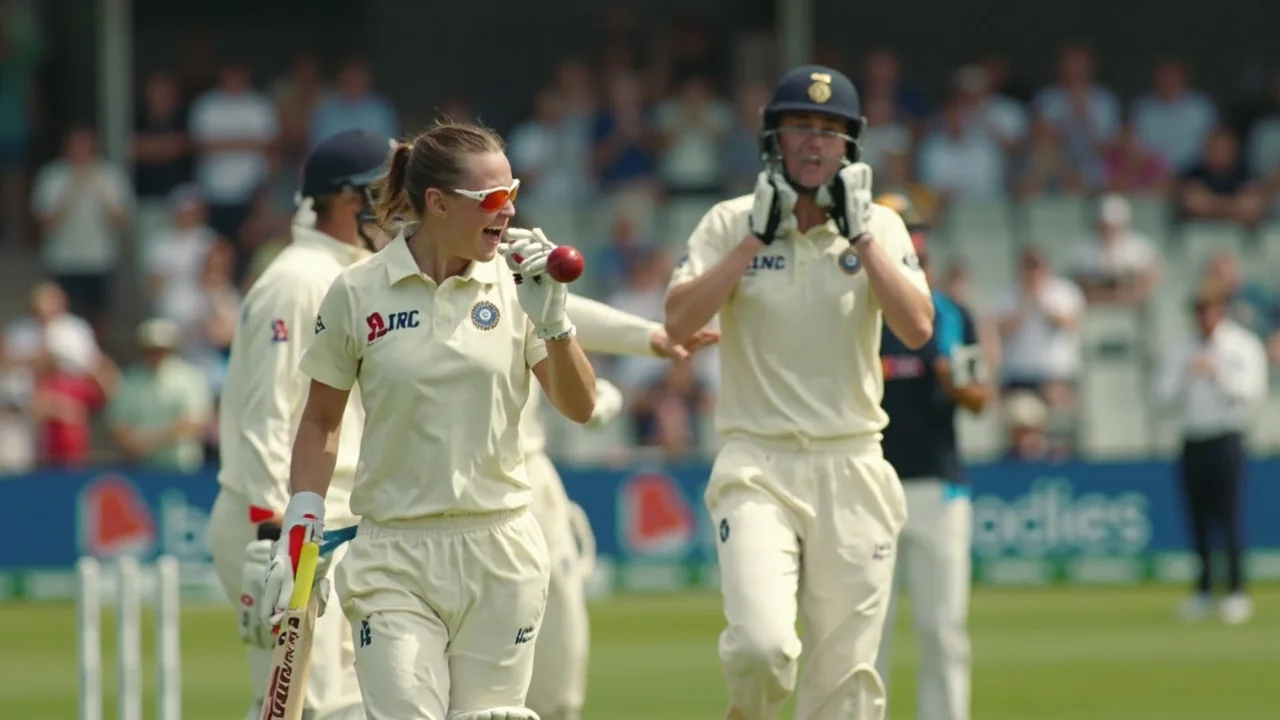
The second innings followed a similar shape, slowed by a 71-run stand between Sciver-Brunt and Alice Capsey that pulled the chase past the lunch interval on day four at 158 for 5. The morning session had started under heavy cloud and a pitch that had begun to take spin. Sneh Rana, brought on in the eighth over of the morning, took three of the last four wickets to fall; Deepti Sharma picked up the other. England's resistance in the second innings, when it came, came from the same batters who had held up India's first-innings charge — and the same names appear in the dismissal list for both innings.
The quotes that framed the day
England coach Charlotte Edwards, speaking to Sky Sports at the close of play on Monday, called India "exceptional" and said they were "really disciplined with bat and ball." Harmanpreet Kaur, speaking at the post-match presentation, singled out Smriti Mandhana's two fifties as the platform on which the second-innings declaration could be set early. Gaud, accepting the player-of-the-match award, was measured rather than expansive: a brief thank-you to the captain, a reference to the conditions, and a nod to Bhatia's batting. The Lord's match is the kind of game that produces those kinds of quotes.
The crowd and what it meant for the ground
Lord's reported a four-day attendance of 37,846, a new record for a women's Test in England. The Saturday of the match, the third day, carried the largest single-day crowd of the four, with the western terraces along the Tavern Stand and the Mound Stand visibly fuller than the upper tiers of the Grand Stand. Members' enclosure access was extended to the Warner Stand for the first three days; the final day, played on a Monday with the working week resuming, was quieter in the upper stands but louder in the lower, and the morning session drew its loudest cheer when Rana took the eighth wicket of the second innings shortly after 11:30 AM.
The MCC had prepared for the match with the same wicket block used for the men's Test against Zimbabwe that finished at Lord's the previous week, a decision that produced a drier surface than the ground's usual early-July offering. The square had been irrigated overnight on days two and three to keep the fourth-innings chase a realistic target — the chase that, in the end, never came.
The retirements that bracketed the match
The Lord's Test was the final international appearance for two of England's most capped cricketers. Tammy Beaumont, who had opened England's batting across formats since 2009, ended her international career with the second-innings dismissal on the fourth morning. Heather Knight, the former captain, had announced before the series that the Lord's Test would be her final international appearance regardless of the result; her 36 in the first innings was her final Test innings, ending a 15-year international career. Both players took a guard of honour from both teams at the close of the match, and the England huddle at the end of day four included a brief address from each.
Beaumont finishes with 4,914 international runs across formats and 14 Test caps; Knight with 5,210 runs and 17 Test caps. Their departures narrow an England batting line-up that has, for the better part of a decade, anchored the side's multi-format results. The depth chart below them is experienced — Sciver-Brunt, Dunkley, Capsey — but neither of those batters carries the same weight of cap-accumulated decision-making the two retirees leave behind.
The series context and what comes next
The Lord's Test was the first of three ODIs and three T20Is that make up England's summer multi-format series against India. The ODIs begin on Friday 17 July at the County Ground in Taunton; the T20Is follow at Old Trafford, Edgbaston and Lord's across the final week of July. India's tour concludes with a Test match at the Rose Bowl in Southampton in early August — their first women's Test at the venue.
For India, the Lord's result settles a long-running question about their red-ball depth. They had won Tests in Australia and at home in the previous 18 months, but a victory at Lord's carries a different kind of weight — a Test win at the home of cricket, against a side that had been WPL finalists and Ashes holders inside the previous cycle. The Gaud–Bhatia–Mandhana core is now a Test core, not just an ODI one.
The records that fell across the four days
Three statistical records were either equalled or set across the match. Bhatia's 113 is the highest individual score by a woman in a Test at Lord's and the first century by an Indian woman in a Test in England. Gaud's 5 for 37 is the best bowling return by an Indian woman in a Test in England. The 37,846 four-day attendance is the largest for a women's Test in England, surpassing the previous record held by the 2024 Taunton Test against South Africa. The 457 target set for England is the highest target ever set in a women's Test at Lord's.
One record did not fall: Australia's 198 (against England in Sydney in 2011) remains the highest successful fourth-innings chase in any women's Test, and that mark is now safe for another cycle. England's second-innings chase at Lord's was always going to be a long one — the result confirmed, rather than threatened, the historic chase benchmark.
What the next Lord's Test might look like
The MCC has not yet confirmed a women's Test at Lord's for the 2027 English summer, but the format's return to the ground for the first time since 2014 — and the four-day crowd numbers — make a second fixture at the venue a near-certainty. The most likely slot is the opening week of August, against a touring side other than India, with the Ashes scheduled for the Australian tour in early 2028. The square has been used twice this summer and is scheduled for renovation across the autumn.
For England's next generation, the task is less about emulating the Lord's match and more about rebuilding the batting depth that Beaumont and Knight leave behind. The WPL contracts that took the two batters away from the domestic circuit for two months a year are unlikely to change; the English regional structure that took their place has produced Sciver-Brunt and Capsey, but no obvious Beaumont or Knight-replacement opener has yet forced her way into the side. The Lord's result is, in that sense, the end of one England chapter and the start of the one that will follow.
Looking back at what the match did for the format
The single most cited number from the match, in the days that followed, was the attendance. The Lord's crowd was larger than the first three days of the men's Test against Zimbabwe the previous week and roughly two-thirds of the Saturday attendance for the men's Ashes Test at Edgbaston the year before. That ratio — not the win margin, not the bowling figures, not Bhatia's century — is the figure that will shape decisions about how the ECB allocates women's fixtures across the 2027 and 2028 summers.
What the match did for the format, in other words, was to put the attendance benchmark on the table in a way the 2014 and 2024 home Tests had not. A 37,846 four-day crowd at Lord's is now the reference point for women's Test fixtures in England. The next women's Test at the ground will be measured against it.
For ongoing coverage of women's Test cricket, multi-format series updates and breaking news from across the women's game, follow the Empire Newsroom desk at fantasycrickett20.com/news.
Empire Newsroom — match coverage daily
Verified reports, squad lists and streaming details for every fixture on the cricket calendar.