FANTASY RETROSPECTIVE
DC vs GT, IPL 2026 Match 14: Fantasy Retrospective from Arun Jaitley Stadium on 8 April
By the Empire Newsroom Desk · originally 8 April 2026 · Arun Jaitley Stadium, Delhi · retrospective
Match 14 · 7:30 PM IST · Star Sports Network · JioHotstar
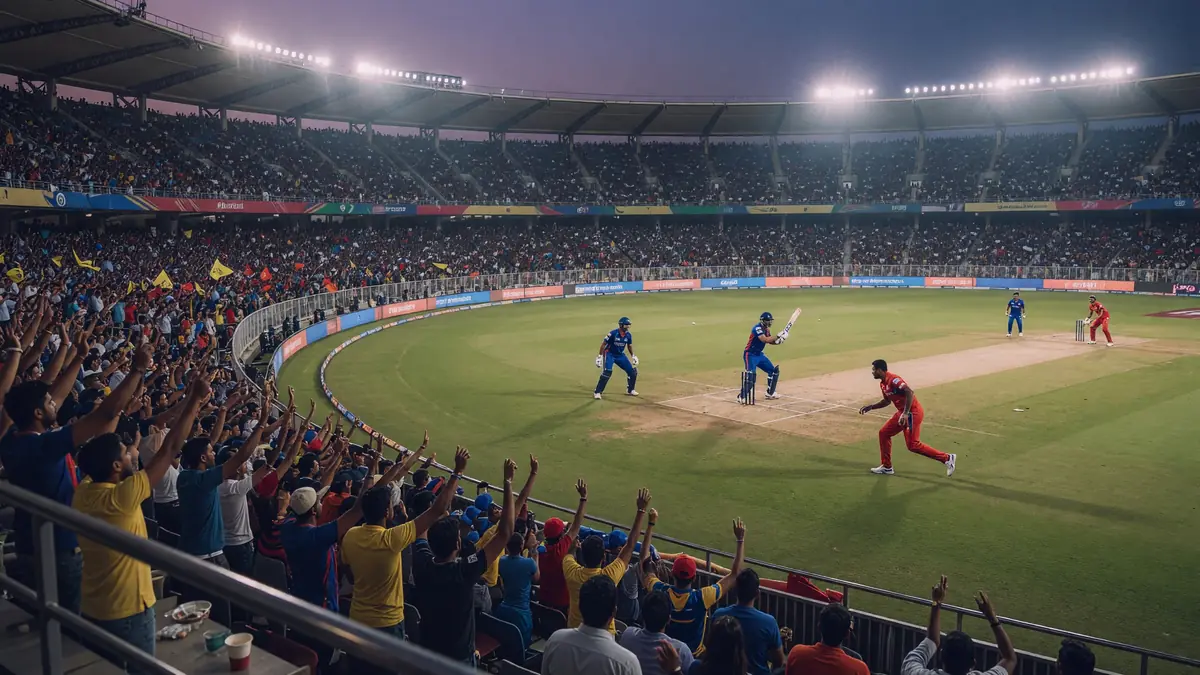
On Wednesday, 8 April 2026, Delhi Capitals hosted Gujarat Titans in Match 14 of IPL 2026 at Arun Jaitley Stadium. First ball was scheduled for 7:30 PM IST. The television feed sat with Star Sports Network; the live stream was listed on JioHotstar. Weather for the evening read cloudy, 36.2°C and 44% humidity — warm Delhi air under cloud cover, the kind of night that rarely stalls a full 40-over contest once the floodlights take over.
This retrospective returns to the fantasy brief that framed that fixture: recent form on both sides, the probable XIs published ahead of toss, the pitch share at the Kotla, and the captaincy shortlist that dominated draft rooms that afternoon. It is not a live preview. The facts below are the ones locked into the public match package on 8 April 2026, preserved here for readers who still rebuild IPL line-ups from historical nights rather than from rolling weekly form alone.
For broader captain-pick frameworks and salary-cap structure beyond a single fixture, the desk keeps a standing reference at Fantasy Cricket.
Where both sides stood before Match 14
Delhi Capitals arrived with momentum. In their previous outing they had beaten Mumbai Indians by six wickets, chasing 162 in 18.1 overs. The chase had not been clean at the top. Early wickets forced a rebuild, and the night turned when Sameer Rizvi walked in as an impact player and struck 90 off 51. Pathum Nissanka added 44 beside him. The bowling share that set the chase up was shared rather than singular: Mukesh Kumar took two wickets; Lungi Ngidi, Axar Patel, Vipraj Nigam and T Natarajan took one each.
Gujarat Titans carried the opposite mood. Their previous match had ended in a six-run defeat to Rajasthan Royals after RR posted 210 and GT replied with 204. Sai Sudharsan made 73 in that chase; Jos Buttler contributed 26. Kagiso Rabada, used as an impact bowler, returned 2 for 42 from four overs. The scoreline left GT short by a margin small enough to sting and large enough to leave the middle order under review.
Form lines over the last five completed matches underlined the contrast. Delhi Capitals were listed W-W-W-L-L. Gujarat Titans were listed L-L-L-L-L. Five straight losses do not erase individual scores — Sudharsan’s 73 still sat on the page — but they do change how fantasy managers price risk. A side on a long losing run often rotates roles faster, and captaincy value concentrates on the two or three names still producing volume.
Probable XIs locked into the preview
The Delhi Capitals eleven that circulated ahead of the fixture read: KL Rahul (wicketkeeper), Pathum Nissanka, N Rana, Sameer Rizvi, DA Miller, T Stubbs, Axar Patel (captain), Vipraj Nigam, KL Yadav, Mukesh Kumar and L Ngidi. The listed bench stretched deep — Abishek Porel, AR Sharma, Karun Nair, P Shaw, AJ Mandal, S Parakh, M Tiwari, Tripurana Vijay, Mitchell Starc, D Chameera, T Natarajan, Auqib Nabi and KA Jamieson — which mattered for impact-player planning more than for the base eleven.
Gujarat Titans were projected as: Shubman Gill, Sai Sudharsan, Jos Buttler (wicketkeeper), Glenn Phillips, Washington Sundar, R Tewatia, Shahrukh Khan, Rashid Khan (captain), K Rabada, Mohammed Siraj and Prasidh Krishna. Their bench included Anuj Rawat, Kumar Kushagra, T Banton, Ravisrinivasan Sai Kishore, Nishant Sindhu, Arshad Khan, Jason Holder, Manav Suthar, Gurnoor Brar, Ishant Sharma, J Yadav, Ashok Sharma, L Wood and K Khejroliya.
Two structural notes stood out for fantasy builders. First, both sides carried dual wicketkeeper options in the broader squad, but the published elevens kept Rahul and Buttler as the primary gloves. Second, GT’s captaincy on the field sat with Rashid Khan while DC’s sat with Axar Patel — a pair of bowling all-rounders whose fantasy value is usually steadier in bowling points than in batting ceiling, which pushed pure batting captaincy toward the openers and No. 3s rather than the on-field captains.
Injury and availability copy in the original package was blank on the day: the desk flagged that updates would be added if they arrived. No confirmed absences were published in that brief, so squad construction treated the probable elevens as the working baseline rather than a reduced pool.
Pitch share at Arun Jaitley Stadium
The pitch package for the Kotla that evening split bowling share evenly: 50% pace and 50% spin. Batting conditions were graded at 60%, bowling conditions at 40%, with an average score listed at 187. That combination is the classic Delhi night-match profile — enough early bounce for the new ball, enough grip later for the finger spinners, and a first-innings median that rewards sides who keep wickets for the final five overs.
For fantasy allocation, a 50-50 pace-spin split argues against loading five same-type bowlers. Mukesh Kumar and Ngidi on the DC side, Rabada, Siraj and Prasidh on the GT side, and the spin pair of Axar Patel with Kuldeep Yadav against Rashid Khan and Washington Sundar, formed the natural six-to-seven name bowling pool. Average score 187 also raised the floor for top-order batters: a 40-ball 55 is more plausible than a 25-ball smash-and-miss when the surface is graded batting-leaning rather than two-paced and slow from ball one.
Captaincy and differential shortlist from the day
Two names dominated the published captaincy board. Sai Sudharsan entered the fixture with 480 runs across his previous ten games, including the 73 against Rajasthan Royals. That volume, stacked on a losing GT side, is exactly the profile fantasy managers chase when a franchise is leaking results but one batter is still clearing 45-plus with regularity. KL Rahul sat on the other side of the ledger with 302 runs in his last ten games — lower raw volume than Sudharsan, higher floor as a DC opener-keeper who sees the new ball and keeps through the innings.
Vice-captaincy conversations on the DC side also pulled toward Sameer Rizvi after the 90 off 51 against Mumbai. Impact-player status complicates ownership: managers who locked him in early accepted the risk that he might start on the bench and only enter if a specialist failed. On a surface averaging 187, that risk was priced as acceptable in grand leagues and less so in small head-to-heads, where a zero from a non-appearance is harder to absorb.
The avoid list from the same package named Shahrukh Khan for Gujarat Titans and Tristan Stubbs for Delhi Capitals. Neither carried a supporting sample in the brief beyond the label itself; the practical reading was role uncertainty and a preference for higher-floor middle-order options (Miller, Phillips, Tewatia) when credits were tight. Managers who still wanted a DC finisher differential tended to prefer Miller’s left-hand matchup against GT’s right-arm pace rather than Stubbs at a similar price band.
How a balanced XI looked on paper that afternoon
A representative mega-league skeleton circulating with the package used both keepers — Jos Buttler and KL Rahul — then stacked batting with Shubman Gill, Sai Sudharsan (captain), Sameer Rizvi (vice-captain) and Pathum Nissanka. All-round cover came from Washington Sundar and Axar Patel. The bowling three closed with Rashid Khan, Kagiso Rabada and Lungi Ngidi. Credits left on that build sat at six from a 100-credit purse, which is the classic late-swap buffer for a confirmed XI change at toss.
That skeleton was not a prediction of the official result. It was a credit-efficient map of the form the preview itself had highlighted: Sudharsan’s ten-game run volume, Rizvi’s most recent finishing knock, Rahul’s dual role, and a bowling mix that respected the 50-50 pace-spin split. Small-league builds on the same night often dropped one of the overseas pacers for an extra Indian spinner once the toss confirmed who would bowl first under the cloud cover.
Broadcast window and the practical draft clock
With a 7:30 PM IST start, the useful fantasy lock window sat between the 6:45 PM toss bulletin and the final XI graphic, usually eight to twelve minutes later. Star Sports Network carried the linear feed; JioHotstar carried the stream. Managers who waited for confirmed elevens still had time to pivot Rizvi or Natarajan if either moved from impact to starting — or the reverse — without losing the full Sudharsan–Rahul spine.
Cloudy 36°C evenings at the Kotla rarely produce extended rain delays once the groundstaff have completed the afternoon covers cycle, and the humidity reading of 44% was not high enough to force a dew narrative by itself. Dew still mattered for the side bowling second, as it always does in Delhi in April, but the published weather snapshot did not flag a storm cell or a delayed start.
What the night still teaches fantasy builders
Match 14 sits in the early block of IPL 2026, when sample sizes are thin and last-match narratives travel further than they should. The durable lessons from the 8 April brief are narrower than a full season model. One: treat ten-game run volume (Sudharsan’s 480, Rahul’s 302) as stronger evidence than a single chase or collapse. Two: price impact-player roles explicitly — Rizvi’s 90 only enters a fantasy scorecard if he is named in the playing window. Three: honour the venue split. A 50-50 pace-spin share and a 187 average score punish monoculture bowling attacks and under-weighted top orders.
The form contrast also remains instructive. A side on W-W-W-L-L (Delhi) can still lose individual match-ups; a side on L-L-L-L-L (Gujarat) can still house the night’s highest individual score. Fantasy points follow minutes in the middle and balls faced, not franchise win percentage. Sudharsan’s previous 73 inside a six-run defeat is the cleanest illustration from this package.
Looking back from later in the season, the 8 April notes also freeze a specific XI shape that may not survive the auction cycle or mid-season trades: Axar as DC captain, Rashid as GT captain, Rahul keeping for Delhi, Buttler keeping for Gujarat. Those role assignments are part of the historical record of Match 14’s fantasy market, even if later rounds reshuffled gloves or leadership.
Closing the ledger on Match 14
Delhi Capitals versus Gujarat Titans on 8 April 2026 was a midweek night game with a clear broadcast path, a batting-leaning Kotla surface, and two sharply different form lines. The fantasy market that afternoon concentrated on Sai Sudharsan and KL Rahul for captaincy, kept Rizvi in the differential conversation after his 90 off 51, and quietly parked Shahrukh Khan and Tristan Stubbs on the avoid board. Those were the facts available before toss. They remain the facts worth filing for anyone reconstructing how early-IPL 2026 drafts were actually built.
The broader craft — salary-cap math, role-risk on impact players, and reading a 50-50 bowling split — outlives any single Wednesday in Delhi. Match 14 simply left a clean snapshot of how those tools were applied when DC’s recent chase of 162 met GT’s chase of 204 that fell six runs short.
Build your next fantasy XI with clearer role data
Captain floors, bowling splits and salary-cap notes updated across the IPL calendar.