FANTASY RETROSPECTIVE
KKR vs RR at Eden Gardens, 19 April 2026: Match 28 Fantasy Tips Retrospective
By the Empire Newsroom Desk · originally 19 April 2026 · Eden Gardens, Kolkata · retrospective
Match 28 · 3:30 PM IST · pitch, predicted XIs and captain shortlist
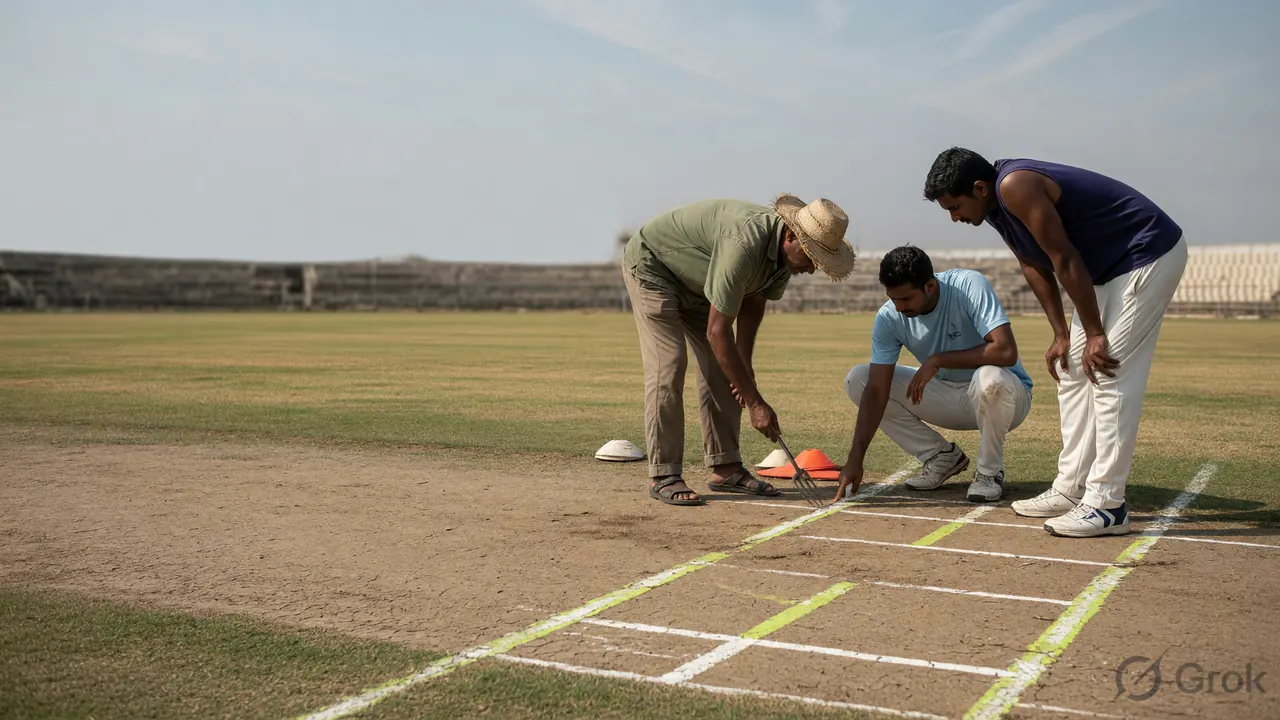
On Sunday, 19 April 2026, Kolkata Knight Riders hosted Rajasthan Royals in Match 28 of IPL 2026 at Eden Gardens. First ball was scheduled for 3:30 PM IST. That morning The Sunday Guardian published a pre-match fantasy package covering the pitch, the predicted elevens, a head-to-head skeleton and a short captaincy shortlist. This retrospective returns to that brief as it stood before toss — not as a live preview, and not as a result rewrite.
The afternoon fixture sat in the middle third of the league stage, when sample sizes are still thin and venue notes travel further than they should. KKR, led in the field by Ajinkya Rahane, were described as stuck near the bottom of the table and needing a win. Rajasthan Royals, led by Riyan Parag, were framed as the side trying to lock a top-table position. For fantasy managers the fixture still mattered less for franchise standings than for the names who would see the new ball, the middle overs and the death.
What follows keeps to the facts locked into that 19 April package: early pace movement for four to five overs, spin taking over once the 36°C afternoon dried the surface, the two predicted elevens with their impact substitutes, the head-to-head eleven that circulated with the brief, and the captain and vice-captain pairs the desk named. For standing captain-pick frameworks beyond a single fixture, the desk keeps a running reference at Fantasy Tactics.
Match package locked for 19 April
The fixture card was simple. Match: Kolkata Knight Riders versus Rajasthan Royals, Match 28. Date: Sunday, 19 April 2026. Time: 3:30 PM IST. Venue: Eden Gardens, Kolkata. That was the full administrative frame. There was no published injury bulletin in the same package, so the working pool was the two predicted elevens rather than a reduced squad list.
An afternoon start at Eden Gardens changes the fantasy clock. The useful lock window sits between the toss graphic and the final XI board, usually eight to twelve minutes later. Managers who waited for confirmed elevens still had time to pivot an impact substitute without losing the spine of the draft. Unlike a 7:30 PM night game, dew was not the dominant second-innings story; heat and surface drying were.
The brief also framed the contest as a clash of moods rather than a pure form table. KKR needed a result to stop a slide. RR wanted to keep pressure on the sides chasing them. Fantasy points, though, follow minutes in the middle and balls faced. A bottom-table side can still house the night’s highest individual score; a top-table side can still lose two early wickets and force a rebuild.
Eden Gardens pitch reading from the brief
The pitch note expected a balanced surface rather than a pure batting track. Pacers were projected to find early movement and nip off the surface through the first four to five overs. Once the intense afternoon heat dried the wicket, spin was expected to take centre stage from roughly the eighth over.
That split is the practical fantasy lever. A four-to-five-over new-ball window rewards the opening pacers who bowl with the hard ball and the openers who see it. A middle-overs spin window rewards the finger and wrist spinners who hold a full four-over quota and the batters who can score without free access to the hard length. The brief also said the first afternoon fixture of the season at the venue was likely to grip and turn more than usual, which raised the floor for spin all-rounders.
Toss preference in the package leaned toward batting first. The logic was straightforward: use the better batting conditions before the track slowed. For fantasy builders that preference matters less as a prediction and more as a role signal. If the side batting first keeps wickets for the final five overs, finishers retain ceiling. If the side bowling first can take two early wickets with the moving ball, the new-ball pacers earn their keep even when the middle overs belong to spin.
Predicted Kolkata Knight Riders eleven
The KKR eleven that circulated with the package read: Tim Seifert (wicketkeeper), Ajinkya Rahane (captain), Angkrish Raghuvanshi, Cameron Green, Rovman Powell, Rinku Singh, Ramandeep Singh, Sunil Narine, Anukul Roy, Vaibhav Arora and Kartik Tyagi. Matheesha Pathirana was named as the impact substitute.
Three structural notes stood out for fantasy builders. First, Seifert kept the gloves in the published eleven, which locked dual-role value into one credit slot. Second, Rahane’s captaincy on the field did not automatically make him the fantasy captain; his value sat in top-order minutes rather than bowling points. Third, Pathirana’s impact-sub status created a classic role risk: managers who wanted his death overs accepted the chance he would start on the bench and only enter if a specialist failed.
Narine’s dual role remained the clearest KKR lever. Four overs of spin at Eden Gardens plus pinch-hitting at the top is the classic multi-category profile. Green’s all-round ceiling suited the afternoon conditions in the brief’s own words, while Rinku Singh sat as the finisher most managers would not leave out of a balanced skeleton. Arora and Tyagi formed the new-ball and change-pace pool if the early movement note held.
Predicted Rajasthan Royals eleven
The Rajasthan Royals eleven read: Vaibhav Sooryavanshi, Yashasvi Jaiswal, Dhruv Jurel (wicketkeeper), Riyan Parag (captain), Donovan Ferreira, Shimron Hetmyer, Ravindra Jadeja, Jofra Archer, Ravi Bishnoi, Nandre Burger and Tushar Deshpande. Sandeep Sharma was named as the impact substitute.
RR’s published shape gave fantasy managers two clean batting levers and two clean bowling levers. Sooryavanshi and Jaiswal opened the innings in the projected order, which is the highest-floor way to capture powerplay boundary points. Parag’s on-field captaincy sat with a batter who was already being priced as a form pick, not merely a leadership badge. Jadeja and Bishnoi covered the spin window the pitch note had flagged; Archer and Burger covered the early movement window.
Sandeep Sharma as impact sub created the same role risk Pathirana did on the other side. Managers who wanted death overs from the RR seam group had to decide whether the base eleven already covered that phase or whether the impact slot was required. Jurel’s keeping role, like Seifert’s, concentrated wicketkeeper points into one name rather than a dual-keeper gamble.
Head-to-head skeleton from the day
The head-to-head fantasy team published with the package selected Tim Seifert as wicketkeeper; Vaibhav Sooryavanshi, Yashasvi Jaiswal, Rinku Singh and Ajinkya Rahane as batters; Sunil Narine, Ravindra Jadeja and Cameron Green as all-rounders; and Jofra Archer, Ravi Bishnoi and Vaibhav Arora as bowlers.
That skeleton is a credit-efficient map of the brief’s own levers rather than a prediction of the official result. It stacks both openers from the RR powerplay, keeps Seifert’s dual role, preserves Narine’s multi-category floor at Eden Gardens, and respects the pace-then-spin split with Archer and Arora early and Bishnoi later. Green and Jadeja fill the all-round band without forcing a pure batter into a bowling slot.
Small-league builds on the same afternoon often dropped one overseas seamer once the toss confirmed who would bowl first under the heat. Mega-league builds kept the overseas seam and used leftover credits as a late-swap buffer for a confirmed XI change. Either way, the skeleton’s logic stayed intact: do not monoculture the bowling attack on a surface expected to move early and turn later.
Captain and vice-captain shortlist
The captain board named two options: Sunil Narine of KKR or Vaibhav Sooryavanshi of RR. Narine was framed as the safer choice because of his history at Eden Gardens and the dual point streams from spin and top-order hitting. Sooryavanshi was framed as the high-risk, high-reward option — a young opener priced for powerplay boundary volume rather than floor.
The vice-captain board named Riyan Parag of RR or Cameron Green of KKR. Parag’s form line was the stated reason for his inclusion; Green’s all-round profile was said to suit the afternoon conditions. Neither name was a pure differential for its own sake. Both sat inside the roles the predicted elevens had already locked: Parag as batting captain with middle-order ceiling, Green as an all-rounder who could contribute with bat and ball on a surface that was not a one-dimensional track.
In practical draft terms the shortlist forced a choice between floor and ceiling. Narine-plus-Parag was the steadier pairing if a manager wanted multi-category insurance. Sooryavanshi-plus-Green was the higher-variance pairing if a manager wanted powerplay explosion plus all-round upside. The brief did not publish ownership percentages; it only named the pairs.
Fantasy tips that still travel
Three tips from the package remain useful as historical craft rather than as live advice. First, do not ignore Sooryavanshi’s powerplay role when an opener is projected to face the new ball on a surface with early movement — the same movement that helps pacers also creates loose balls for an aggressive opener. Second, treat Narine as multi-category value at Eden Gardens, not merely as a spinner or a batter. Third, price impact substitutes explicitly: Pathirana’s death overs only enter a fantasy scorecard if he is named in the playing window.
The death-bowling note in the original package was conditional. If Pathirana debuted for KKR, his slinging yorkers were flagged as a wicket-taking differential in the final overs. That is a role note, not a confirmed selection. Managers who chased it accepted a binary outcome: either the impact sub entered and the differential paid, or he stayed on the bench and the slot returned zero.
A quieter craft point sits under those three tips. On a pitch expected to move early and turn later, bowling monocultures fail more often than they succeed. Five same-type bowlers leave a manager exposed to whichever phase does not arrive. The published head-to-head skeleton avoided that trap by mixing Archer and Arora with Bishnoi and by keeping Narine and Jadeja in the all-round band.
How the afternoon draft clock actually worked
With a 3:30 PM IST start, the useful fantasy lock window sat earlier than a night fixture. Managers who waited for confirmed elevens still had time to pivot Pathirana or Sandeep Sharma if either moved from impact to starting — or the reverse — without losing the Narine–Sooryavanshi spine. The heat reading of 36°C mattered for the surface more than for a rain delay narrative.
Afternoon fixtures also change how managers read the second innings. Dew is less of a default story than it is under lights. The brief’s pitch note already pointed to a drying, gripping surface rather than a wet ball. That reading supported spin later even if the side bowling second had the harder job of defending a total on a used track.
Broadcast and stream details were not the centre of the Sunday Guardian package, so this retrospective does not invent them. The fantasy craft that does survive is the lock-window discipline: freeze the spine early, leave a small credit buffer, and spend the final minutes only on confirmed XI changes.
What the 19 April notes still teach
Match 28 sits in the middle block of IPL 2026, when last-match narratives still travel further than they should. The durable lessons from the 19 April brief are narrower than a full season model. One: honour the venue split — early pace, later spin. Two: price dual-role names (Narine, Seifert, Jurel) as credit efficiency, not as automatic captaincy. Three: treat impact-player roles as binary risk, not as free upside.
The form contrast also remains instructive. A side near the bottom of the table can still house the afternoon’s highest individual score; a side near the top can still lose early wickets and force a rebuild. Fantasy points follow minutes and balls, not franchise win percentage. Sooryavanshi’s powerplay role and Narine’s dual streams are cleaner evidence than table position alone.
Looking back from later in the season, the 19 April notes also freeze a specific XI shape that may not survive mid-season trades: Rahane as KKR captain, Parag as RR captain, Seifert keeping for KKR, Jurel keeping for RR, Pathirana and Sandeep Sharma as the named impact substitutes. Those role assignments are part of the historical record of Match 28’s fantasy market, even if later rounds reshuffled gloves or leadership.
Closing the ledger on Match 28
Kolkata Knight Riders versus Rajasthan Royals on 19 April 2026 was an afternoon Eden Gardens fixture with a clear pitch split, two detailed predicted elevens and a short captaincy board. The fantasy market that morning concentrated on Sunil Narine and Vaibhav Sooryavanshi for captaincy, kept Riyan Parag and Cameron Green in the vice-captain conversation, and quietly priced Pathirana as a conditional death differential. Those were the facts available before toss. They remain the facts worth filing for anyone reconstructing how mid-IPL 2026 drafts were actually built.
The broader craft — salary-cap math, role-risk on impact players, and reading a pace-then-spin surface — outlives any single Sunday in Kolkata. Match 28 simply left a clean snapshot of how those tools were applied when a bottom-table KKR side met a top-table RR side on a drying Eden Gardens strip.
Build your next fantasy XI with clearer role data
Captain floors, bowling splits and salary-cap notes updated across the IPL calendar.